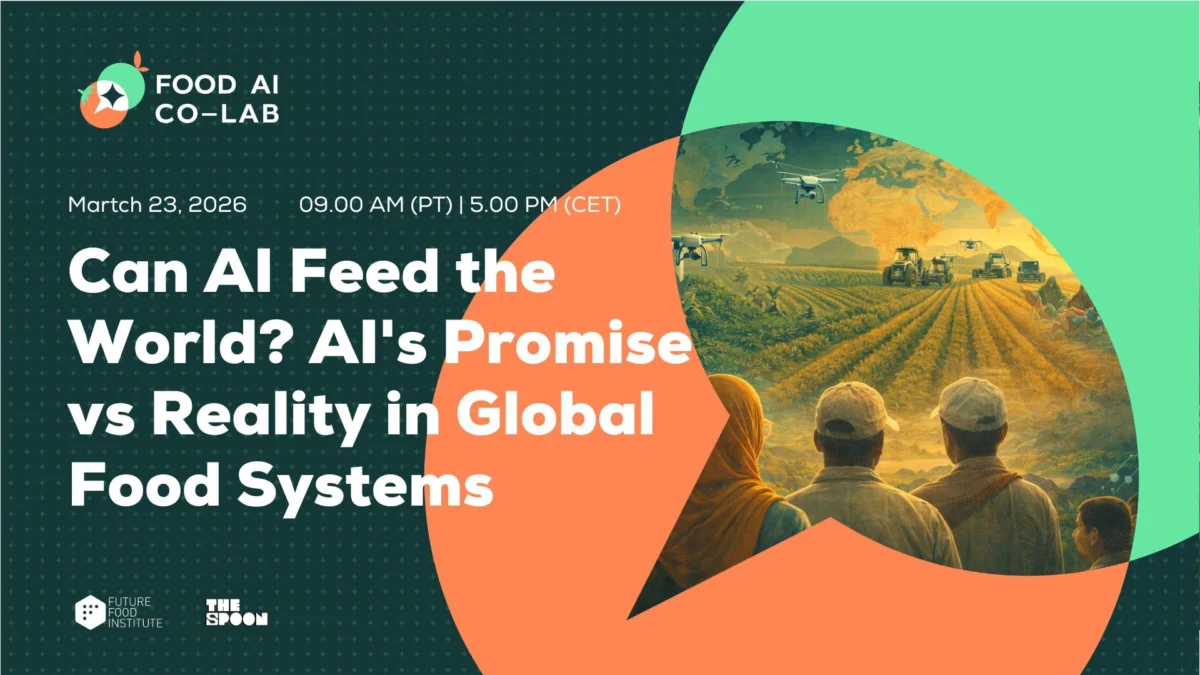

The global food system, a complex web of production, distribution, and consumption, stands at a critical juncture. While technological advancements, particularly in Artificial Intelligence (AI), promise transformative solutions, their impact is often viewed through the lens of developed economies and established tech hubs. However, a more expansive perspective reveals that the profound implications of AI for food security may be most acutely felt in regions grappling with fundamental challenges such as limited infrastructure, climate vulnerability, and persistent hunger. This is the core of a critical discussion set to unfold with David Laborde, Director of the Agrifood Economics Division at the Food and Agriculture Organization of the United Nations (FAO), shedding light on how AI can offer tangible solutions even in the most resource-constrained environments.
The stark reality of global hunger and malnutrition underscores the urgency of such conversations. As of recent estimates, an estimated 673 million people worldwide remain food insecure, a figure that has seen an unsettling resurgence in recent years, exacerbated by a confluence of global crises. Furthermore, over 2.6 billion individuals lack access to a healthy diet, a deficiency that contributes to a wide spectrum of non-communicable diseases and hinders human development. The global food system’s fragility is not solely a product of technological limitations; it is deeply intertwined with the escalating impacts of climate shocks, geopolitical conflicts, and pervasive economic instability. These external pressures often disproportionately affect vulnerable populations, widening existing inequalities and complicating efforts to achieve sustainable food security.
Against this backdrop, the potential of Artificial Intelligence to revolutionize agriculture and food systems is immense, yet its application requires a nuanced understanding of local contexts. While AI-powered precision agriculture, sophisticated supply chain optimization, and advanced food safety monitoring systems are rapidly evolving in developed nations, their immediate applicability in regions with nascent digital infrastructure, limited internet connectivity, and scarce data resources presents a distinct set of challenges and opportunities. The upcoming discourse aims to bridge this gap, exploring how AI can be leveraged not as a distant future aspiration, but as a present-day tool to address immediate food security needs.
A Converging Moment: The Food AI CoLab Discussion
The forthcoming conversation, scheduled for 9 AM Pacific Time, is positioned as a crucial exploration of AI’s role in addressing global food challenges. Hosted by The Spoon, a publication dedicated to the intersection of food and technology, the event will feature David Laborde, a leading authority on agricultural economics and food policy at the FAO. Laborde’s extensive experience at the FAO, an organization at the forefront of international efforts to combat hunger and promote sustainable agriculture, provides a unique vantage point for this discussion. His work often involves analyzing the economic, social, and environmental factors that shape global food systems, making him an invaluable voice in understanding the practical deployment of advanced technologies in diverse settings.
The core objective of this "Food AI CoLab" is to move beyond theoretical discussions and delve into the actionable pathways for AI implementation in real-world scenarios. The focus will be on identifying specific areas where AI can yield immediate and impactful results, even in the face of infrastructural limitations. This includes exploring how AI can assist smallholder farmers, who constitute the backbone of food production in many developing regions, in improving crop yields, managing pests and diseases more effectively, and optimizing resource utilization. The conversation is expected to touch upon the development of AI-powered tools that are accessible, affordable, and adaptable to the unique conditions of these communities.
Addressing Foundational Concerns: Data, Rights, and Equity
Beyond the technological applications, the discussion is poised to address the fundamental ethical and socio-economic considerations that underpin the equitable deployment of AI in the food sector. Key among these are the critical issues of data ownership and farmer rights. In many agricultural communities, particularly in developing nations, data related to farming practices, crop yields, and market prices are often collected and utilized without the full consent or benefit of the farmers themselves. The rise of AI, which relies heavily on vast datasets, necessitates a robust framework that ensures farmers retain ownership of their data and are empowered to leverage it for their own economic advancement.
The conversation will likely explore the implications of data colonialism and the need for a rights-based approach to data governance in agriculture. This involves establishing clear protocols for data collection, storage, and usage, ensuring transparency, and promoting data sharing models that are mutually beneficial. Laborde’s insights will be particularly valuable in understanding how international bodies like the FAO are working to advocate for policies that protect farmer rights and promote equitable access to the benefits derived from AI technologies.
Furthermore, the pervasive issue of inequality within the global food system is a central theme. The introduction of advanced technologies like AI has the potential to either exacerbate existing disparities or serve as a catalyst for greater inclusivity. The discussion will aim to identify strategies for ensuring that AI-driven innovations do not create a digital divide in agriculture, leaving marginalized farmers further behind. This involves a focus on developing AI solutions that are designed with inclusivity in mind, catering to the needs of smallholder farmers, women in agriculture, and other vulnerable groups. The goal is to foster a future where AI empowers all stakeholders in the food value chain, rather than concentrating power and benefits in the hands of a few.
Building Resilient and Sustainable Systems: The Path Forward
The ultimate aim of integrating AI into the food system, especially in challenging environments, is to build greater resilience and sustainability. Climate change poses an existential threat to food security, with unpredictable weather patterns, increased frequency of extreme events, and shifting agricultural zones impacting crop production worldwide. AI offers powerful tools for climate adaptation and mitigation in agriculture. This can include AI-powered early warning systems for droughts, floods, and pest outbreaks, enabling farmers to take proactive measures. It also encompasses the development of climate-resilient crop varieties, optimized irrigation techniques, and precision application of fertilizers and pesticides, all of which can be enhanced through AI analysis.

The conversation is expected to highlight the practical steps required to foster such resilient systems. This includes investing in the development of local AI expertise, building robust digital infrastructure, and creating supportive policy environments. The FAO, through its various programs and initiatives, plays a crucial role in facilitating knowledge transfer, capacity building, and the development of best practices for AI adoption in agriculture. Laborde’s perspective will be instrumental in outlining the FAO’s strategic vision for leveraging AI to achieve the Sustainable Development Goals, particularly SDG 2: Zero Hunger.
Background Context: The Evolving Landscape of Food Technology
The current dialogue around AI in food is part of a broader, accelerating trend of technological innovation within the agrifood sector. For decades, agricultural practices have been gradually enhanced by mechanization, improved seed varieties, and chemical inputs. However, the advent of digital technologies, including the internet of things (IoT), big data analytics, and artificial intelligence, has ushered in a new era of "AgriTech" and "FoodTech."
The initial wave of innovation often focused on large-scale commercial farming, optimizing operations for efficiency and profitability. This included the development of autonomous tractors, drone-based crop monitoring, and sophisticated farm management software. However, as the capabilities of AI have matured, so too has the understanding of its potential to address more complex and systemic issues, such as food waste reduction, personalized nutrition, and, critically, global food security.
The COVID-19 pandemic further illuminated the vulnerabilities of global supply chains and the critical importance of resilient food systems. Disruptions in logistics, labor shortages, and shifts in consumer demand highlighted the need for greater adaptability and intelligence within the food sector. This has spurred increased investment and research into AI-powered solutions that can enhance traceability, optimize inventory management, and predict demand more accurately.
The FAO’s Role and Global Initiatives
The Food and Agriculture Organization of the United Nations (FAO) has long been a central player in addressing global food security. Its mandate encompasses a wide range of activities, from setting international standards and providing policy advice to implementing field projects and collecting vital statistics on agriculture, food security, and nutrition. In recent years, the FAO has increasingly recognized the transformative potential of digital technologies, including AI, in achieving its objectives.
The FAO’s digital strategy emphasizes the importance of leveraging technology to empower smallholder farmers, improve food safety, enhance market access, and promote sustainable resource management. The organization actively engages in research, pilot projects, and capacity-building initiatives to facilitate the responsible adoption of digital tools in agriculture across its member states. David Laborde’s leadership within the Agrifood Economics Division places him at the forefront of these efforts, bridging the gap between economic analysis, policy development, and the practical application of technology.
Several global initiatives are also actively promoting the use of AI in agriculture. The Global Forum on Agricultural Research and Innovation (GFAR) and the CGIAR (Consultative Group on International Agricultural Research) are platforms that foster collaboration and knowledge sharing among researchers, policymakers, and practitioners working on agricultural innovation. These forums often highlight the role of AI in developing climate-smart agriculture, improving food quality, and enhancing rural livelihoods.
Implications and Future Outlook
The implications of a successful and equitable integration of AI into global food systems are far-reaching. For millions of food-insecure individuals, AI could mean access to more nutritious food, increased agricultural incomes, and greater resilience against climate shocks. For the global community, it could translate into a more stable and sustainable food supply, reduced environmental impact from agriculture, and a significant step towards achieving the Zero Hunger goal.
However, the path forward is not without its challenges. Ensuring that AI technologies are developed and deployed in a way that is inclusive, ethical, and beneficial to all is paramount. This requires ongoing collaboration between governments, international organizations, the private sector, research institutions, and, most importantly, the farmers themselves. The conversation with David Laborde represents a vital step in this ongoing dialogue, offering expert insights into how we can harness the power of AI to build a more food-secure and equitable future for all. The success of such initiatives will ultimately depend on our collective ability to navigate the complexities of technology adoption while prioritizing human well-being and environmental sustainability. The upcoming discussion promises to illuminate key strategies and considerations for achieving this critical balance.